By: Lauren Michael
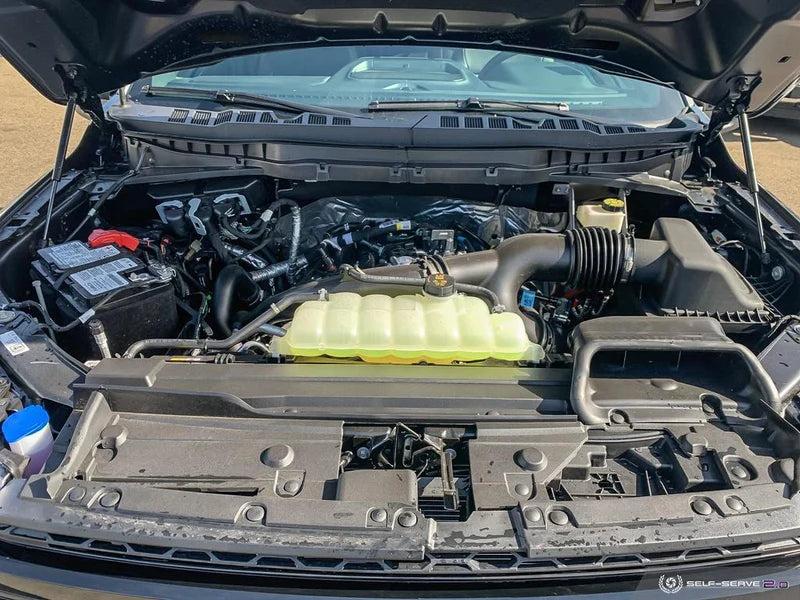
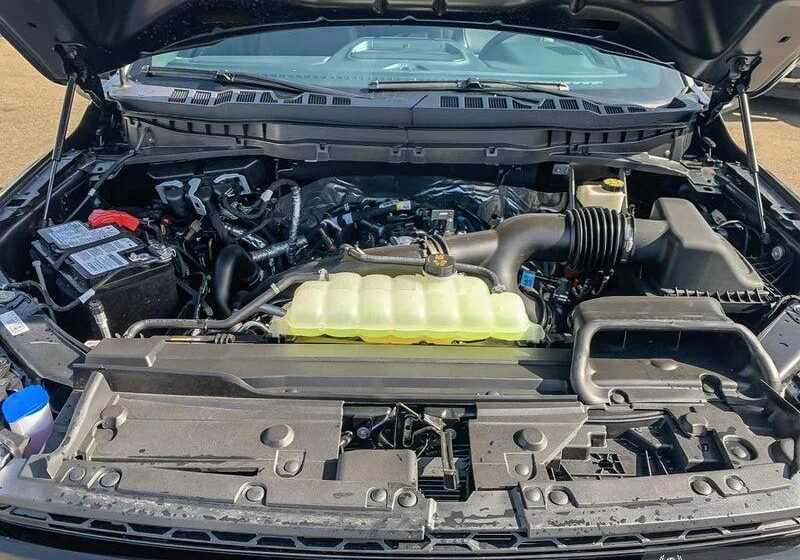
Modern Ford EcoBoost engines have completely changed the performance truck market over the past decade. Platforms like the 3.5L and 2.7L EcoBoost found in the F-150 combine strong low-end torque, impressive towing capability, and excellent drivability — all while maintaining fuel efficiency that traditional V8 platforms struggle to match.
But despite the hardware capability of these engines, factory calibration is often designed around compromise rather than maximum drivability or performance.
Factory Calibration Prioritizes More Than Performance
OEM manufacturers like Ford must calibrate vehicles for an enormous range of operating conditions.
That includes:
- emissions compliance
- fuel economy targets
- global fuel quality variations
- drivetrain longevity
- warranty protection
- towing safety
- thermal protection
- transmission durability
As a result, many EcoBoost-equipped trucks leave the factory with extremely conservative torque management strategies.
Drivers commonly notice:
- delayed throttle response
- hesitation during acceleration
- inconsistent downshifting
- excessive gear hunting
- reduced boost response under load
- sluggish midrange acceleration
In many cases, the engine is capable of producing significantly more usable torque than the factory calibration allows.
Torque Management Plays A Bigger Role Than Most Drivers Realize
One of the biggest misconceptions about tuning is that performance gains come purely from increasing boost pressure.
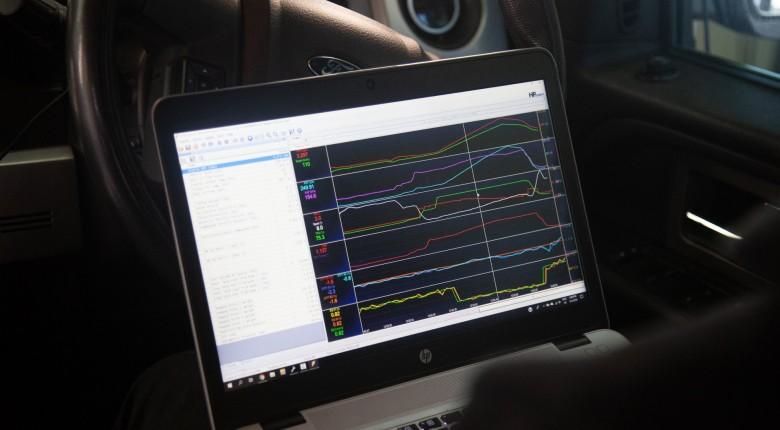
In reality, modern EcoBoost platforms rely heavily on torque management systems that constantly communicate between the ECU and transmission control system.
Even under full throttle, the ECU may intentionally limit torque delivery through:
- throttle closure
- ignition timing reduction
- boost intervention
- transmission torque requests
- thermal protection logic
This is especially noticeable during towing, highway merging, or rapid throttle transitions where the truck may feel less responsive than expected despite the engine’s capability.
Why Transmission Calibration Matters On The 10-Speed Platform
On newer F-150 EcoBoost trucks, transmission behavior is just as important as engine tuning.
The factory 10-speed transmission calibration prioritizes fuel economy and smoothness for mass-market driving conditions, but this often results in:
- unnecessary upshifting
- delayed downshifts
- excessive gear changes
- inconsistent throttle coordination
A properly optimized calibration can significantly improve overall drivability by refining how the transmission responds to torque demand.
The goal isn’t simply harder shifts — it’s smarter power delivery.
OEM+ Calibration Philosophy
Our approach focuses on enhancing the vehicle’s natural driving characteristics rather than completely changing them.
Instead of creating an overly aggressive or unstable driving experience, our calibrations are designed to improve:
- throttle response
- boost delivery
- low-end torque behavior
- transmission coordination
- towing drivability
- acceleration consistency
The result is a truck that feels significantly more responsive, smoother under load, and more predictable during everyday driving conditions.
Supported Ford EcoBoost Platforms
We currently support a wide range of Ford EcoBoost applications, including:
Ford MG1CS015
- 2017–2025 Ford F-150
- 3.5L EcoBoost V6
Ford MG1CS018
- 2018–2025 Ford F-150
- 2.7L EcoBoost V6
Available services include:
- Stage 1 ECU Calibration
- Stage 2 ECU Calibration
- Transmission / TCU Optimization
- Diagnostic Services
- ECU Cloning & Programming
- Bench Unlock & Recovery Services
Support for additional Ford platforms is continuously expanding.
Real-World Performance Matters
Peak horsepower numbers only tell part of the story.
The true difference in a properly calibrated EcoBoost truck is how the vehicle behaves in everyday driving situations:
- smoother acceleration
- faster throttle response
- improved towing confidence
- reduced hesitation
- more consistent power delivery
Modern turbocharged platforms have enormous untapped potential — but unlocking that potential properly requires more than simply increasing boost pressure.
Calibration is about balance, drivability, and system integration.